Menu
🔐 VIP Access

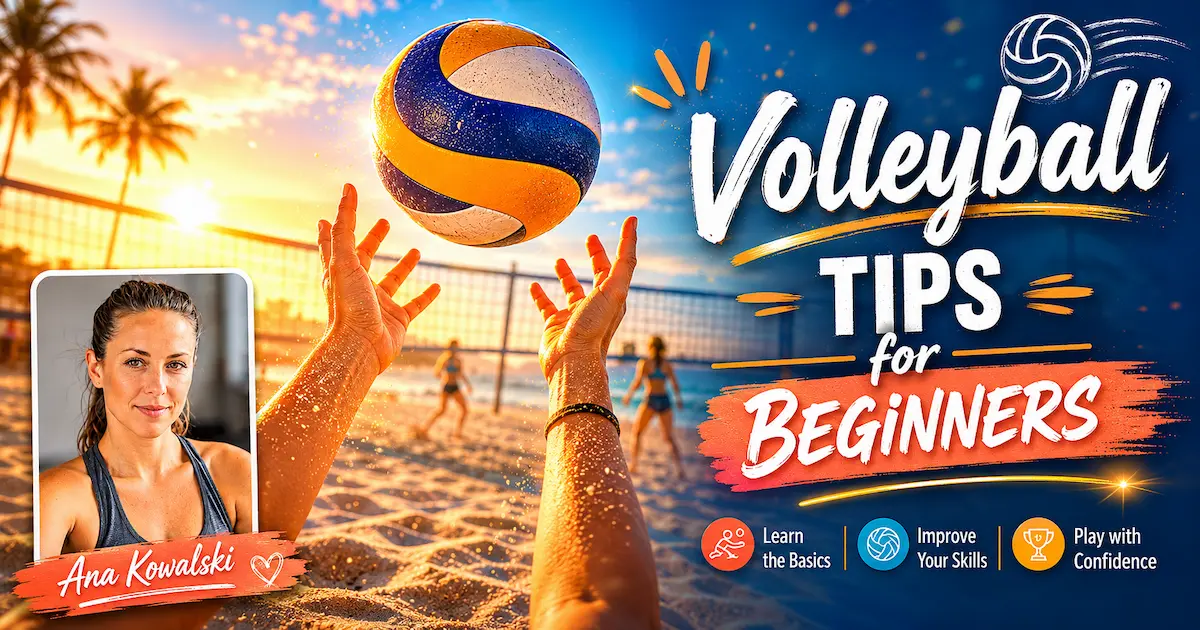
Volleyball Tips for Beginners

Volleyball is one of the most exciting and beginner-friendly sports in the world. If you are new to the game, learning the right volleyball tips for beginners can help you improve faster, avoid common mistakes, and enjoy the sport much more.

This complete guide explains the most important basics every new player should know, including serving techniques, passing fundamentals, movement tips, court positions, and beginner strategies used in real matches.

Whether you want to play volleyball recreationally, join a school team, or simply understand the game better, these beginner volleyball tips will give you the foundation needed to start improving today.

AUSTRIA 1.BUNDESLIGA WOMEN
Time
Home
Away
Tip
10:00
TUS Bad Radkersburg (W)
vs
ASKO Purgstall (W)
i
17:30
Bisamberg/Hol (W)
vs
Linz Steg (W)
i
BRAZIL SUPERLIGA
Time
Home
Away
Tip
00:00
Sada Cruzeiro
vs
Guarulhos
i
21:30
Suzano Volei
vs
JF Volei
i
GERMANY BUNDESLIGA
Time
Home
Away
Tip
15:00
Helios Grizzlys Giesen
vs
SSC Karlsruhe
i
15:30
SVG Luneburg
vs
ASV Dachau
i
ITALY A1 WOMEN
Time
Home
Away
Tip
16:00
Chieri (W)
vs
Macerata (W)
i
16:00
Firenze (W)
vs
Busto Arsizio (W)
i
16:00
Cuneo (W)
vs
Bergamo (W)
i
16:15
Conegliano (W)
vs
Novara (W)
i
ITALY A2
Time
Home
Away
Tip
16:00
Siena
vs
Lagonegro
i
16:30
Brescia
vs
Pordenone
i
17:00
Catania
vs
Ravenna
i
17:00
Macerata
vs
Aversa
i
17:00
Sorrento
vs
Fano
i
ITALY A2 WOMEN
Time
Home
Away
Tip
15:00
Altino (W)
vs
Club Italia (W)
i
16:00
Roma (W)
vs
Brescia (W)
i
16:00
Fasano (W)
vs
Melendugno (W)
i
16:00
Trentino (W)
vs
Talmassons (W)
i
16:00
Marsala (W)
vs
Offanengo (W)
i
16:00
Imola (W)
vs
Casalmaggiore (W)
i
16:00
Concorezzo (W)
vs
Modena (W)
i
ITALY SUPERLEGA
Time
Home
Away
Tip
16:00
Monza
vs
Perugia
i
17:00
Civitanova
vs
Trentino
i
18:00
Milano
vs
Verona
i
KOREA KOVO
Time
Home
Away
Tip
05:00
Ansan OK Financial Group
vs
Korean Air Jumbos
i
KOREA KOVO WOMEN
Time
Home
Away
Tip
07:00
AI Peppers Gwangju (W)
vs
Daejeon JungKwanJang (W)
i
POLAND LIGA SIATKóWKI WOMEN
Time
Home
Away
Tip
16:30
Mielec (W)
vs
Rzeszow (W)
i
POLAND PLUS LIGA
Time
Home
Away
Tip
13:45
PGE Skra Belchatow
vs
Projekt Warszawa
i
19:00
Barkom Lwow
vs
Slepsk Suwalki
i
TüRKIYE EFELER LEAGUE
Time
Home
Away
Tip
10:00
Spor Toto SK
vs
Halkbank Ankara
i
10:00
Alanya Bld
vs
Bursa B.sehir Belediyesi
i
11:00
Gebze Genclik
vs
IBB Spor
i
11:00
Istanbul Genclik Spor
vs
Galatasaray
i
13:00
Ziraat Bankasi
vs
Gaziantep Genclik Spor
i
13:00
Fenerbahce
vs
Akkus Bld
i
UGANDA NATIONAL LEAGUE A WOMEN
Time
Home
Away
Tip
10:00
Kampala University (W)
vs
VVC (W)
i

Volleyball Tips for Beginners: The Complete Step-by-Step Guide to Learning, Improving, and Enjoying the Game

Volleyball is one of the most exciting and beginner-friendly sports in the world. It is fast without being impossible to learn, strategic without feeling overly complicated, and competitive while still being incredibly fun in casual settings. Whether you want to play at school, in a local club, on the beach with friends, or simply understand the game better, this complete beginner’s guide will help you build a strong foundation from day one. In this article, you will learn the essential volleyball tips for beginners, including rules, techniques, positioning, footwork, serving, passing, setting, attacking, blocking, defense, communication, practice plans, fitness, mindset, common mistakes, and long-term improvement strategies. The goal is simple: give you everything you need to start smart, improve faster, and enjoy the process.

Part 1: Why Volleyball Is a Great Sport for Beginners

If you are new to sports or trying to choose a game that offers both fun and skill development, volleyball is a fantastic option. One reason is that it teaches teamwork in a very natural way. Every rally depends on cooperation. Unlike some sports where one player can dominate possession for long stretches, volleyball forces communication and shared responsibility. A pass sets up a set. A set creates an attack. A block or dig keeps the team alive. Even beginners quickly learn that every small improvement helps the whole group.

Another reason volleyball is ideal for beginners is that progress is very visible. In the beginning, even making clean contact with the ball can feel difficult. But after a few practice sessions, you begin to notice clear improvements. Your serves go over the net more often. Your forearm passes become steadier. Your movement starts feeling more coordinated. That sense of visible progress keeps motivation high, which is especially important for new players.

Volleyball also helps develop a wide range of athletic qualities. It improves reaction time, balance, coordination, timing, agility, and lower-body strength. You do not need to be the tallest or strongest person on the court to become a valuable player. Smart movement, strong technique, quick decision-making, and reliable ball control matter just as much as height or power. That makes volleyball more accessible than many beginners expect.

For people who feel nervous about starting, here is an encouraging truth: every good volleyball player was once a beginner who mishit easy balls, forgot rotations, and felt awkward in basic drills. The players who improve the fastest are not always the most naturally gifted. They are the ones who stay patient, practice fundamentals, and keep showing up with a willingness to learn. If that sounds like you, then you already have one of the most important tools for success.

As a beginner, your first goal should not be to look advanced. It should be to build reliable basics. Volleyball rewards repetition and consistency. The more often you practice correct movements, the more natural they become. Over time, the game slows down in your mind because your body starts responding automatically. That is when volleyball becomes even more enjoyable.

Part 2: Basic Volleyball Rules Every Beginner Should Know

Before improving your skills, you need a clear understanding of the basic rules. Volleyball is usually played with six players per side in indoor volleyball, though there are other formats like beach volleyball, which typically uses two players per team. The main objective is to send the ball over the net and land it on the opponent’s side while preventing the opponent from doing the same.

Each team is usually allowed up to three contacts to return the ball. In most situations, these contacts follow a pass, set, and hit pattern. The first touch is often a forearm pass or dig, the second is a set, and the third is an attack. A player is not allowed to catch or hold the ball. Contact should be clean and brief. That rule alone makes proper technique extremely important.

A rally begins with a serve. The server sends the ball from behind the end line over the net into the opponent’s court. If the serve lands in bounds or the receiving team cannot return it properly, the serving team wins the point. Modern volleyball commonly uses rally scoring, which means a point is awarded on every rally regardless of which team served. Matches are often played best of five sets, with the first four sets to 25 points and the deciding set to 15, though local leagues may use different formats.

One of the most confusing topics for beginners is rotation. When your team wins the serve from the opponent, players rotate clockwise. This determines serving order and court position. Even though players may shift after the serve depending on tactics, they must begin the rally in the correct rotational order. Understanding where you should stand before the serve is a key early skill.

You should also know the court zones. There are front-row and back-row positions. Front-row players are generally more involved in attacking and blocking near the net. Back-row players focus more on serving, defense, and ball control. Certain rules limit how back-row players can attack near the net, so learning positional responsibilities matters as you advance.

Common faults include hitting the ball out of bounds, touching the net during play, stepping on or over the service line while serving, lifting or carrying the ball, and making more than three team contacts before returning it. At first, do not stress about memorizing every small rule detail. Focus on the core structure: serve, receive, set up an attack, keep the ball controlled, and respect the rotation and contact rules.

Part 3: The Right Beginner Mindset for Learning Volleyball

Many beginners make the mistake of judging themselves too harshly in the early stages. Volleyball can feel awkward at first because the ball does not stay in your hands. It rebounds quickly, and timing matters a lot. You may know what you want to do, but your body might not cooperate yet. That is normal. In fact, it is expected. The right mindset can make the difference between steady improvement and early frustration.

The first mindset shift is understanding that mistakes are part of the learning process, not proof that you are bad at the sport. A missed serve, a shanked pass, or a mistimed jump is not failure. It is feedback. Every contact tells you something. Maybe your platform angle was wrong. Maybe your feet stopped moving. Maybe you swung too early. If you treat mistakes as information, you improve much faster.

The second important mindset is valuing consistency over flashiness. Beginners often want to spike hard immediately because attacking looks exciting. But coaches value players who can serve in, pass accurately, communicate, and stay disciplined. A player who can make reliable simple plays is often far more useful than one who attempts difficult actions with low success. Build the basics first and power will come later.

Patience matters too. Volleyball is a sport of layers. You first learn how to contact the ball. Then you learn how to move to the ball. Then you learn where to send it. Then you learn how to make decisions under pressure. Improvement happens step by step. If you compare your first month to someone else’s third year, you will only feel discouraged. Compare yourself to your previous self instead.

Confidence should also be built on preparation, not pretending. You do not need to walk onto the court acting like an expert. Real confidence grows when you practice serves repeatedly, improve your passing stance, and understand your role. The more prepared you are, the calmer you feel. That calmness helps decision-making during rallies.

Finally, remember that volleyball is meant to be enjoyed. Serious practice and fun are not opposites. The more joy you find in learning, the easier it becomes to stay consistent. Celebrate small wins: a clean set, a controlled dig, a serve streak, a smart call of “mine.” Those little moments build the foundation for major progress.

Part 4: Essential Volleyball Equipment for Beginners

You do not need expensive gear to start playing volleyball, but having the right basic equipment can make learning easier, safer, and more enjoyable. The most important item is, of course, a proper volleyball. Indoor volleyballs are different from beach volleyballs. Indoor balls are generally smoother and slightly lighter in feel, while beach balls are often larger, softer, and designed for outdoor conditions. If you are practicing indoors, start with an indoor volleyball that feels comfortable in your hands and arms.

Good shoes matter more than many beginners realize. Volleyball involves quick lateral movement, sudden stops, jumps, and landings. Running shoes are not always ideal because they are designed mainly for forward motion. Volleyball shoes or indoor court shoes usually provide better grip, stability, and cushioning for multidirectional movement. Wearing the wrong shoes can increase the risk of slipping or ankle discomfort.

Knee pads are another useful beginner item, especially for indoor players. As you learn to defend and dive safely, you will become more comfortable getting low and reacting to the ball. Knee pads do not remove the need for good technique, but they can help reduce impact and make you less afraid of floor contact. That extra confidence can improve your defense.

Comfortable athletic clothing also helps. Choose clothes that allow free movement in the shoulders, hips, and knees. Avoid anything too loose if it interferes with motion. Many beginners underestimate how much easier it is to focus when their gear feels comfortable and functional.

Hydration is part of your equipment too. Bring a water bottle to every session. Volleyball can involve repeated bursts of effort, especially in warm gyms or outdoor settings. Tired, dehydrated players tend to move slower, lose focus, and develop poor habits late in practice.

If you want to practice on your own, a wall becomes one of the best tools you can have. A simple ball and a solid wall allow you to rehearse passing, setting, and ball control drills without needing a full team. Resistance bands, jump ropes, and cones can also support footwork and conditioning, but they are optional in the beginning. Start with the basics, use them consistently, and upgrade only when your training needs become more specific.

Part 5: Ready Position, Athletic Stance, and First Movement

One of the most important volleyball tips for beginners is learning how to be ready before the ball comes to you. New players often focus only on contact, but good contact starts with good positioning. If your body is unprepared, even a simple ball can become difficult to control. That is why the athletic ready position is one of the first habits you should build.

A strong volleyball stance starts with your feet about shoulder-width apart, knees bent, and weight slightly forward on the balls of your feet. Your back should be straight but relaxed, and your arms should be loose and ready to move. You should feel balanced, not stiff. Think of your stance as a spring-loaded position. You are not standing passively. You are prepared to move in any direction at any moment.

Beginners often stand too upright, which slows reaction time. When your knees are not bent, it takes longer to drop low for a pass or push off for movement. Another common mistake is leaning too far forward or letting the heels bear too much weight. Good balance allows quick adjustments without losing control.

The next key concept is first movement. In volleyball, the first step after reading the ball is crucial. Good players do not wait until the ball is almost on them before reacting. They read the server, passer, setter, or hitter, then move early. As a beginner, your goal is not perfect anticipation right away. It is simply to stop being late. The earlier you move your feet, the easier the ball becomes.

Short shuffle steps are often better than large lunges. When moving side to side, keep your body low and balanced. Crossing your feet can be useful in certain situations when covering more distance quickly, but beginners should first become comfortable with controlled shuffle movement and small adjustment steps. Those last little steps near the ball often determine whether your pass is clean or off target.

Try this mental checklist every rally: ready early, read the ball, move your feet, stop under control, then contact. When beginners improve their stance and movement, every other skill becomes easier. Passing becomes steadier. Defense improves. Setting gets more accurate. Even confidence increases because you feel less rushed. Volleyball is not just about hands and arms. It starts from the ground up.

Part 6: Forearm Passing Tips for Beginners

Forearm passing, also called bumping or platform passing, is one of the first essential skills every beginner should learn. It is used for serve receive, free balls, and many defensive situations. A strong pass creates better offensive opportunities, while a poor pass often forces your team into a difficult recovery. For that reason, passing is one of the most valuable skills in volleyball.

The first step is learning how to form a correct platform. Bring your hands together in a way that feels secure and keeps your forearms flat. Some players place one hand inside the other and wrap the thumbs forward. Others use a slightly different grip. What matters most is that your forearms create a stable, even contact surface and your thumbs stay aligned and pointed forward. Avoid bent elbows and swinging arms wildly.

Contact should happen on the forearms, not on the wrists or hands. The ball should rebound cleanly off your platform. Beginners often try to lift the ball using a big arm swing, but passing is more about body angle and leg drive than arm power. Keep the platform steady and use your legs to guide the ball upward and forward. Think of yourself as directing the ball, not slapping it.

Your feet matter just as much as your platform. Move behind the ball whenever possible so it is centered in front of your body. Passing while reaching far to the side reduces control. Stay low, angle your shoulders toward your target, and let the ball come to your platform. If you are constantly off balance, the issue is often footwork rather than contact technique.

Another important tip is controlling the angle. Your platform acts like a rebound surface, so wherever it faces strongly influences where the ball goes. If the platform angles too high, the ball may pop up too far. If it angles too low or sideways, the pass may drift away from the setter. Learn to make small adjustments with your shoulders and body line rather than last-second wrist flicks.

Beginners should also practice passing without panic. On serve receive, it is tempting to freeze or overreact. Stay calm, call the ball if it is yours, move early, and trust the platform. Repetition is the path to confidence. Wall passing, partner passing, and controlled serve-receive drills are excellent ways to improve. A reliable passer becomes the backbone of any team, and that reliability starts with clean fundamentals.

Part 7: Overhead Setting Tips for Better Ball Control

Setting is one of the most technical skills in volleyball, but beginners can still learn strong basics early. The purpose of a set is to place the ball accurately for a hitter or teammate. A good set is soft, controlled, and easy to attack. Even if you are not a dedicated setter, learning how to set properly improves overall ball control and helps in emergency situations when the second touch comes to you.

Start with hand position. Raise your hands above your forehead and shape them as if you are holding a large ball. Your fingers should be spread comfortably, with your thumbs and index fingers forming a loose triangle or window shape. The ball should contact your fingertips, not your palms. Contact should feel soft and quick, not like a catch or throw.

Your body should get under the ball early. Many setting problems begin because players are late and try to reach awkwardly. Move your feet, square your body toward the target, bend your knees slightly, and prepare before the ball arrives. Setting is not only a hand skill. It is a full-body skill that uses balance, timing, and leg extension.

When you release the ball, extend through your legs, arms, and fingertips in one smooth motion. The goal is to push the ball cleanly, not to spin it excessively or double-contact it. Beginners often hold the ball too long or let one hand dominate the contact, which can lead to inconsistent accuracy and rule violations. Focus on soft, even pressure from both hands.

Setting accuracy depends heavily on consistency. Aim for the same body mechanics each time. If your elbows flare too much, your set may drift. If you contact the ball too low, control becomes harder. If you lean backward unnecessarily, the set may float behind you. Practice makes these details more natural.

A great beginner drill is wall setting. Set repeatedly against a wall while maintaining good posture and clean hand contact. Count how many controlled sets you can make in a row. Partner setting is also excellent because it adds reading, movement, and target control. As you improve, practice setting from different distances and after moving into position. Good setters make the game feel organized. Even as a beginner, learning this skill sharpens your touch, awareness, and overall understanding of volleyball rhythm.

Part 8: Serving Tips for Beginners Who Want More Consistency

Serving is one of the most powerful skills a beginner can develop because it is fully under your control. No one is blocking you, no one is rushing you, and you decide when the play begins. That means the serve is one of the best opportunities to score points directly or put pressure on the opponent. For beginners, the biggest goal is not power at first. It is consistency.

The easiest serve to learn is usually the underhand serve. While it may not be the most advanced technique, it teaches timing, control, and confidence. Stand with your non-dominant foot slightly forward, hold the ball in front of you, and swing your serving hand from low to high in a smooth motion. Contact the bottom-middle of the ball and send it over the net with a relaxed but firm swing. Do not underestimate the value of a dependable underhand serve when you are starting out.

As your confidence grows, the overhand serve becomes the next major step. For an overhand serve, begin with a balanced stance and hold the ball in front of your hitting shoulder. Toss the ball slightly upward and in front of you, keeping the toss controlled. One of the most common beginner mistakes is tossing too high or too far, which destroys timing. A small, repeatable toss is much better than a dramatic one.

As you swing, contact the back center of the ball with a firm open hand. Step forward and follow through toward your target. Power should come from coordinated body movement, not just an arm swing. Beginners often try to hit too hard too early, causing the serve to sail out or into the net. Focus on solid contact and direction first. Once your technique is repeatable, extra power becomes easier to add.

Another smart serving tip is to develop a pre-serve routine. Bounce the ball, take a breath, visualize the target, and then serve. A routine helps reduce nervousness and makes performance more consistent under pressure. Serving is as much mental as physical.

Practice serving with purpose. Do not simply hit ball after ball without thinking. Pick zones on the court. Aim short, deep, left, right, or at weaker passers when you get more advanced. The sooner you see the serve as a strategic weapon rather than just a way to start play, the faster your game will grow.

Part 9: Hitting and Spiking Basics for New Players

Spiking is often the skill that attracts people to volleyball in the first place. It looks explosive, powerful, and exciting. But effective hitting is about much more than jumping high and swinging hard. For beginners, the real foundation of attacking starts with approach footwork, timing, and controlled contact. If you learn those pieces well, power will develop much more naturally later.

The first concept to understand is the approach. Right-handed hitters commonly use a left-right-left approach, while left-handed hitters often use the opposite. The exact rhythm can vary, but the purpose is the same: build momentum, stay balanced, and jump upward in control. Beginners often rush the approach or take uneven steps, which makes timing difficult. Start slowly and focus on rhythm before trying to be explosive.

Your arms also play an important role. As you approach, your arms swing back, then drive upward as you jump. This helps with both balance and lift. Keep your chest up and eyes on the ball. Good hitters watch the set, adjust their steps, and jump at the right moment. Timing matters so much that even strong athletes can struggle if they jump too early or too late.

At contact, your hitting arm should be drawn back with the elbow high. Strike the ball with an open hand at the highest comfortable point you can reach. Snap through the ball and follow through naturally. Beginners often contact the ball too low, hit with a bent wrist, or swing without full body coordination. Instead of trying to crush every ball, aim for clean contact and directional control.

It is also helpful to remember that smart attacking beats reckless power. You do not need every hit to be a highlight. Sometimes rolling the ball into open space, hitting high off the block, or making a controlled shot is the best decision. The strongest attackers are not just hard hitters. They are efficient problem-solvers.

When practicing, begin with easy tossed balls or standing contacts before moving to full approaches. Break the skill into parts: footwork, jump timing, arm swing, and ball contact. Then combine them gradually. Spiking becomes much less intimidating when you stop treating it as one giant motion and start mastering it piece by piece.

Part 10: Blocking and Net Defense for Beginners

Blocking can feel advanced to beginners, but understanding the basics early helps develop better court awareness and net confidence. The main purpose of a block is to stop or slow down the opponent’s attack at the net. Even when you do not score a direct block point, a well-positioned block can deflect the ball into a playable area for your defenders or force the attacker into a more difficult shot.

Good blocking begins with ready posture. Stand balanced near the net with knees bent and hands in front of your chest. Keep your eyes on the opposing side, especially the setter and hitter. Beginners often stare only at the ball and react too late. Better blockers read clues: the set location, the hitter’s approach, and the likely attacking angle.

Footwork is important. When moving along the net, use quick shuffle steps or crossover movements depending on the distance. Stay square and balanced so you can jump straight up rather than drifting sideways. Reaching while off balance often leads to poor hand position and ineffective blocking.

As you jump, extend your arms fully with strong hands pressed over the net without touching it. Your fingers should be spread and firm, creating a solid wall. One major beginner mistake is jumping with hands too low or too late. Another is swinging the hands at the ball instead of pressing over. Think of blocking as taking away space rather than swatting wildly.

Timing matters greatly. If you jump too soon, the hitter waits. If you jump too late, the ball is already past you. The best way to improve timing is through repetition and observation. Watch hitters carefully and learn their rhythm. In practice, focus on being disciplined rather than dramatic.

Even if you are not tall, you can still become a useful blocker by reading well, moving efficiently, and presenting strong hands. Blocking also improves your understanding of offense because it teaches you what attackers are looking for. As a beginner, start by learning the stance, movement, and hand positioning. Over time, those foundations turn net defense into a real strength.

Part 11: Defensive Digging Tips and Reading the Game

Defense is where hustle, focus, and bravery often shine. A great dig can change the energy of a rally and keep your team alive when the opponent seems ready to score. For beginners, defensive improvement starts with two areas: body positioning and reading the hitter. When you combine the two, defense becomes much less random.

Your basic defensive posture should be low, balanced, and active. Keep your feet wider than shoulder width if needed, knees bent, and weight forward. Your arms should be relaxed and ready. If you stand too high, you will struggle to react to sharp attacks and quick changes in direction. Defense rewards players who are prepared before the ball is hit.

Reading the hitter means paying attention to cues. Is the set tight to the net or off the net? Is the hitter approaching fast or slowly? Are their shoulders open cross-court or turned line? You do not need to predict perfectly as a beginner. Even learning to notice patterns will improve your reactions. Defense becomes easier when you stop waiting for the ball to surprise you and start tracking likely outcomes.

When digging hard-driven balls, create a stable platform similar to forearm passing. Get behind the ball when possible, keep your angle controlled, and use your legs to absorb and redirect the force. Some balls require emergency moves, but solid defense begins with good initial positioning. Beginners often overreach with the arms instead of moving the feet first. Move first whenever you can.

Do not be afraid of the ball. This may sound simple, but fear causes hesitation, and hesitation ruins defense. The more technically prepared you are, the less fear you feel. Start with controlled attack drills, easier tossed balls, and partner work before progressing to harder hits. Confidence in defense grows through repeated successful contacts.

Floor defense also includes learning how to sprawl, roll, or dive safely when you become more advanced. However, beginners should first focus on staying low and moving efficiently. Many spectacular plays happen only because the defender was ready early, not because they made a miracle save at the last second. Strong defense is built on anticipation, discipline, and courage.

Part 12: Court Positions and Rotations Made Simple

One reason some beginners feel overwhelmed in volleyball is that they do not just have to learn skills. They also have to learn where to stand and what each position does. Understanding positions and rotations makes the game feel much less chaotic. Once you know your responsibilities, you can play with more confidence and less confusion.

In standard indoor six-player volleyball, the court is divided into six rotational positions. The front row includes left front, middle front, and right front. The back row includes left back, middle back, and right back. Players rotate clockwise when their team wins the serve from the opponent. This means every player eventually moves through all positions unless a more advanced system with substitutions is being used.

The main front-row roles are usually outside hitter, middle blocker, and opposite or right-side hitter. Front-row players are more involved in blocking and attacking near the net. The back row typically includes defensive specialists, passers, and the server when in that zone. Setters can come from either row depending on the system, but many teams organize play so the setter takes the second ball whenever possible.

For beginners, it is enough to understand this basic principle: before the serve, players must line up in the correct rotational order relative to their teammates. After the serve, they can often move into their preferred playing positions. That is why teams may look like they shift quickly as soon as the ball is served.

If rotations confuse you, do not try to memorize every tactical variation at once. Learn the court zones first. Then understand whether you are front row or back row. Then learn what your coach expects from your current position. Over time, the system becomes much clearer. Asking teammates for reminders is normal, especially in the beginning.

Another helpful tip is to connect positions with responsibilities. If you are right back and serving, focus on getting the ball in. If you are front row near the net, prepare for blocking and transition. If you are back row in serve receive, get ready to pass. Simple role-based thinking helps beginners stay organized until the full tactical picture becomes second nature.

Part 13: Communication Tips That Instantly Improve Team Play

One of the fastest ways to become a better volleyball player, even before your technique becomes advanced, is to communicate well. Volleyball is not a silent sport. The ball moves too quickly, responsibilities overlap, and hesitation leads to errors. Good communication reduces confusion, builds trust, and often makes an average team play far better than the sum of its parts.

The most basic communication word is “mine.” If the ball is yours, call it early and clearly. Do not mumble or wait until the last second. A confident early call helps teammates get out of the way and prepare for the next contact. If the ball is not yours, call “help,” “out,” or your teammate’s name when appropriate. The key is clarity.

Communication also continues after contact. Passers can call where the ball is going. Setters can talk to hitters. Players can warn each other about short serves, tips, or open areas. Between rallies, teammates should encourage each other and quickly fix small misunderstandings. A team that talks well stays connected under pressure.

Many beginners stay quiet because they fear being wrong or sounding awkward. But silence causes more problems than imperfect communication. Even simple calls improve team rhythm. Start with the basics: call the ball, call free balls, call seams, and use names when needed. Those habits alone can raise your usefulness on court dramatically.

Positive communication matters too. Volleyball includes mistakes. What happens after a mistake affects the next rally. Good teammates reset quickly. They say things like “next ball,” “you’re good,” or “we’ve got this.” That emotional steadiness helps everyone play more freely. Negative reactions create tension and hesitation.

If you want to stand out as a beginner, be the player who communicates consistently, listens carefully, and supports others. Coaches notice that. Teammates trust it. And the game itself becomes easier because more information is being shared in real time. Great communication is not a bonus skill in volleyball. It is part of the sport’s foundation.

Part 14: Common Beginner Mistakes and How to Fix Them

Every beginner makes mistakes in volleyball, and that is completely normal. The important thing is learning to recognize the most common ones early so they do not become long-term habits. The good news is that many beginner problems are very fixable once you understand their cause.

One of the most common mistakes is standing too upright. Players who stay tall react slowly, struggle to pass low balls, and feel rushed during rallies. The fix is simple but important: bend your knees earlier, stay light on your feet, and prepare before the ball crosses the net. Low, ready posture solves many problems at once.

Another common mistake is swinging the arms too much during passing. Beginners often try to force the ball upward with a dramatic motion instead of using a stable platform and controlled leg drive. To fix this, practice keeping the platform steady and letting your body angle do the work. Smaller, cleaner movements usually create better control.

Late footwork is another major issue. Players often reach for the ball instead of moving to it. This leads to off-balance contact, poor accuracy, and panic. The fix is to focus on reading early and moving your feet first. Even just one extra adjustment step can transform the quality of a pass or set.

On offense, beginners often jump too early when attacking. They see the ball and get excited, then end up descending before contact. To fix this, watch the set carefully and work on your approach rhythm. Better timing usually improves hitting more than extra power does.

Serving mistakes often come from rushing, inconsistent tosses, or trying to hit too hard. A reliable pre-serve routine and a smaller, repeatable toss help tremendously. Think control before force.

There are also mental mistakes. Some beginners stop communicating after one error, avoid the ball, or become too self-conscious. The fix is learning how to reset quickly. Volleyball rewards players who stay engaged after mistakes. The next ball always matters more than the last one.

If you regularly reflect on what went wrong and make one small correction at a time, progress becomes much faster. Do not try to repair ten things at once. Pick the most important issue, work on it deliberately, and then move to the next one.

Part 15: Solo Volleyball Drills for Faster Improvement

Not every beginner has access to a full team, coach, or regular training group. Fortunately, there are many ways to improve alone. Solo drills can build touch, footwork, consistency, and confidence, especially when done with focus. A player who practices intelligently outside team sessions often improves much faster than one who relies only on group practice.

Wall drills are among the best solo training methods. You can practice forearm passing against a wall by keeping the ball controlled and returning it repeatedly from a set distance. Focus on platform angle, posture, and movement. Setting against a wall is also excellent for fingertip control and hand consistency. Try to keep the ball at a steady height and maintain rhythm for long streaks.

Self-toss passing drills also help. Toss the ball slightly ahead of yourself, move your feet into position, and pass to a target area. This trains reading, body control, and stable contact. You can do something similar with self-setting: toss, move, set, reset. These drills may look simple, but they teach the repeated adjustment skills that volleyball demands constantly.

Serving practice is another high-value solo activity. Mark zones on the court if possible, or imagine targets. Do not just count how many serves go over the net. Track where they land. Purposeful serving practice builds accuracy and confidence far more effectively than random repetition.

Shadow footwork is useful too. Practice your ready stance, shuffle steps, approach patterns, and blocking movements without the ball. While it may feel basic, this kind of repetition improves coordination and muscle memory. When the ball is added later, your movement feels more natural.

You can also record yourself. Video is a powerful teacher because it shows what you are actually doing, not what you think you are doing. Many beginners are surprised by how upright they stand, how inconsistent their toss is, or how late their approach timing looks on video. That awareness accelerates improvement.

The key to effective solo training is intention. Do fewer drills with more concentration. Focus on quality, not just duration. Twenty minutes of smart repetition can be more valuable than an hour of distracted practice.

Part 16: Fitness, Strength, and Mobility for Beginner Volleyball Players

You do not need to become a gym expert to improve at volleyball, but basic fitness makes a huge difference. The sport demands bursts of movement, repeated jumping, quick changes of direction, and stable body control. Beginners who build general athleticism usually learn technical skills more easily because their bodies can support the movements better.

Lower-body strength is especially valuable. Squats, lunges, glute bridges, and controlled jump work help with balance, jumping, and defensive posture. Strong legs improve not only your vertical ability but also your passing base and ability to stay low without tiring quickly. Even bodyweight exercises can make a difference when done consistently.

Core strength is another major factor. Your core helps transfer force, stabilize the torso, and maintain control during passing, setting, serving, and hitting. Exercises like planks, dead bugs, side planks, and controlled rotational work are useful for beginners. A stable core supports better posture and reduces sloppy movement.

Shoulder health matters too because volleyball involves repeated overhead motions. Light band exercises, shoulder mobility drills, and balanced upper-body strengthening can help reduce discomfort and improve control. The goal is not to bulk up aggressively. It is to become more resilient and coordinated.

Mobility is often overlooked. Tight hips, ankles, and shoulders can limit your stance, movement, and overhead mechanics. Simple dynamic warm-ups before practice and short mobility sessions after training can help you move more freely. Better mobility often makes technique feel easier because your body can reach the positions it needs.

Conditioning should be sport-relevant. Volleyball is not mainly about long-distance endurance. It is more about repeated short efforts with brief recovery. Shuttle runs, jump rope, movement intervals, and agility work fit the game better than only jogging. That said, a basic aerobic base still helps recovery between rallies and practice sessions.

Beginners should keep fitness supportive, not exhausting. The purpose is to help your volleyball, not drain all your energy before you play. A balanced weekly routine of strength, mobility, and light conditioning can make you faster, steadier, and more durable on court.

Part 17: Warm-Up, Recovery, and Injury Prevention Tips

Many beginners are eager to jump straight into drills and games, but warm-up and recovery are essential parts of improvement. A proper warm-up prepares your body to move well, reduces injury risk, and helps your mind switch into performance mode. Recovery helps you stay fresh enough to keep improving over time instead of breaking down.

A good volleyball warm-up starts with general movement. Light jogging, skipping, or dynamic footwork raises body temperature. Then add mobility for the ankles, hips, shoulders, and thoracic spine. After that, include activation work such as glute bridges, mini-band steps, or shoulder band exercises. Finally, progress into volleyball-specific actions like shuffles, jumps, arm swings, peppering, and controlled ball contacts.

Static stretching is not usually the best first choice before explosive movement. Dynamic preparation tends to work better because it gets the joints moving while keeping the body ready for fast actions. After practice, longer stretches can be more helpful when the body is warm and you are focusing on recovery.

Landing mechanics are also important for injury prevention. When you jump, try to land softly with knees bent and body under control. Avoid collapsing inward at the knees or landing stiffly on straight legs. Good landing habits protect the joints and improve balance during transitions.

Listening to your body matters as well. Some soreness is normal when learning a new sport, especially in the shoulders, legs, and core. Sharp pain, persistent swelling, or symptoms that worsen with activity should not be ignored. Rest, proper technique, and gradual progression are smarter than pushing recklessly through everything.

Sleep, hydration, and nutrition also support recovery more than many beginners realize. Tired players react slowly, lose technical quality, and become more vulnerable to overuse problems. A simple habit like drinking enough water and sleeping well can improve both performance and durability.

If you want to enjoy volleyball for the long term, treat recovery as part of training. It is not something separate from improvement. The players who manage their bodies well can practice more consistently, and consistency is the real engine of progress.

Part 18: How to Practice Smarter and Improve Faster

Practice alone does not guarantee improvement. Smart practice does. Many beginners spend time around the sport without truly getting better because their training lacks focus. If you want faster progress, you need a clear structure: know what you are working on, why it matters, and how to measure whether it is improving.

Start by identifying your biggest priority. Maybe your serve is inconsistent. Maybe your passing breaks down under pressure. Maybe your footwork is late. Choose one or two key areas rather than trying to fix everything at once. Focus creates momentum. Scattered effort usually creates frustration.

Use repetition with feedback. This means not only doing a skill many times, but paying attention to what each repetition tells you. If five serves go into the net, ask what the common pattern is. Was your toss low? Did you stop your follow-through? Were you too tense? Reflection turns repetition into learning.

Game-like practice is also valuable. Basic drills are important for mechanics, but you should gradually add movement, decisions, and pressure. Passing a tossed ball while standing still is different from reading a real serve. Setting from a perfect toss is different from adjusting to a difficult second contact. The closer practice gets to real volleyball, the more transferable your improvement becomes.

Another smart habit is goal setting. Set small targets such as making eight out of ten serves into a chosen zone, completing thirty clean wall sets in a row, or maintaining low defensive posture throughout a full drill. Small measurable goals make training more engaging and give you proof of progress.

Do not ignore rest and reflection days. Improvement does not come only from constant effort. It also comes from absorbing what you have learned. Watching matches, reviewing your own video, and thinking through tactical situations can sharpen your volleyball intelligence even when you are off court.

The players who improve fastest are often the ones who stay curious. They ask why a technique works, notice patterns, and actively solve problems. If you combine consistent effort with smart focus, your progress can accelerate in a way that feels surprisingly satisfying.

Part 19: Beginner Volleyball Strategy and Game Awareness

Once your basic skills begin to develop, strategy becomes more important. Volleyball is not just about executing techniques. It is also about making better decisions than the other team. Even beginners can start building game awareness early, and doing so often makes them more effective before they become physically dominant players.

One simple strategic principle is keeping the ball in play. At beginner level, many points are lost through unforced errors rather than brilliant attacks. That means a smart player values consistency. A controlled serve in the court is usually better than a powerful miss. A safe pass to the middle of the court is better than a risky attempt that shanks out of play. Make the opponent earn points whenever possible.

Another basic strategy is targeting weakness. If one opponent struggles to pass, serving toward them can create pressure. If a space on the court is repeatedly left open, place the ball there. Volleyball is a game of observation. The sooner you start noticing patterns, the better your tactical sense becomes.

Transition is also a major concept. What do you do after your team contacts the ball? If you pass, are you ready to cover? If you block, do you move off the net into defensive position? If you attack, do you prepare for the next play instead of admiring the hit? Strong players reset quickly between actions. Beginners often pause after contact and become spectators. Good volleyball requires continuous involvement.

Understanding risk versus reward is part of growing as a player. Not every ball needs a kill attempt. Sometimes the best play is a controlled free ball to a difficult zone, forcing the opponent into a less dangerous attack. Sometimes the best swing is a roll shot to open court. Tactical maturity means choosing the right play, not the most dramatic one.

Watch experienced players and study how they move without the ball. Notice how early they prepare, how they communicate, and how they position themselves based on the setter, hitter, and score. Strategy is not reserved for elite athletes. It begins the moment you stop seeing the game as random and start understanding the logic behind each rally.

Part 20: Final Beginner Volleyball Advice and a Long-Term Improvement Plan

If you have read this far, you already understand one of the most important truths about volleyball: improvement is built on fundamentals. The best volleyball tips for beginners are not magic shortcuts. They are the repeatable habits that make every skill more reliable over time. Stay low, move your feet, communicate early, focus on clean contact, and practice with purpose. These simple ideas may not look glamorous, but they produce real results.

Your long-term growth in volleyball should follow a smart progression. In the first stage, focus on understanding the rules, developing a ready stance, and learning basic passing, serving, and setting. Build comfort with the ball and confidence in movement. In the second stage, improve consistency. Serve more accurately, pass with better platform control, and move more efficiently in drills and games. In the third stage, begin layering in stronger tactical awareness, improved attacking mechanics, blocking discipline, and position-specific knowledge.

Do not rush through those stages. The players who skip fundamentals often plateau because they lack the base needed for higher-level play. The players who master the basics tend to keep improving because every new skill fits onto a stable foundation.

It is also important to keep your relationship with the sport healthy. Volleyball is competitive, but it should still be enjoyable. Stay coachable. Ask questions. Support teammates. Accept bad days without panicking. Growth in any skill is never perfectly linear. Some sessions feel amazing. Others feel clumsy. What matters most is showing up consistently and staying engaged with the process.

If you want a practical weekly plan, try this structure: one session focused on ball control, one session focused on serving and movement, one session involving game play or team drills, and two short supplemental sessions for strength, mobility, or wall work. That kind of balanced routine can help beginners improve steadily without becoming overwhelmed.

Most importantly, remember that being a beginner is not a weakness. It is the starting point of every strong player you have ever watched. Stay patient, stay curious, and keep practicing the basics with intent. Over time, the game will start to feel slower, your contacts will become cleaner, your decisions will improve, and your confidence will grow. That is how real volleyball progress happens.

Whether your goal is to play recreationally, join a school or club team, compete on the beach, or simply understand the sport better, these volleyball tips for beginners can give you a powerful head start. Learn the fundamentals well, build good habits early, and trust the process. Volleyball rewards effort, intelligence, and consistency. If you bring those qualities to your training, your future in the sport can be both successful and deeply enjoyable.